


Horse
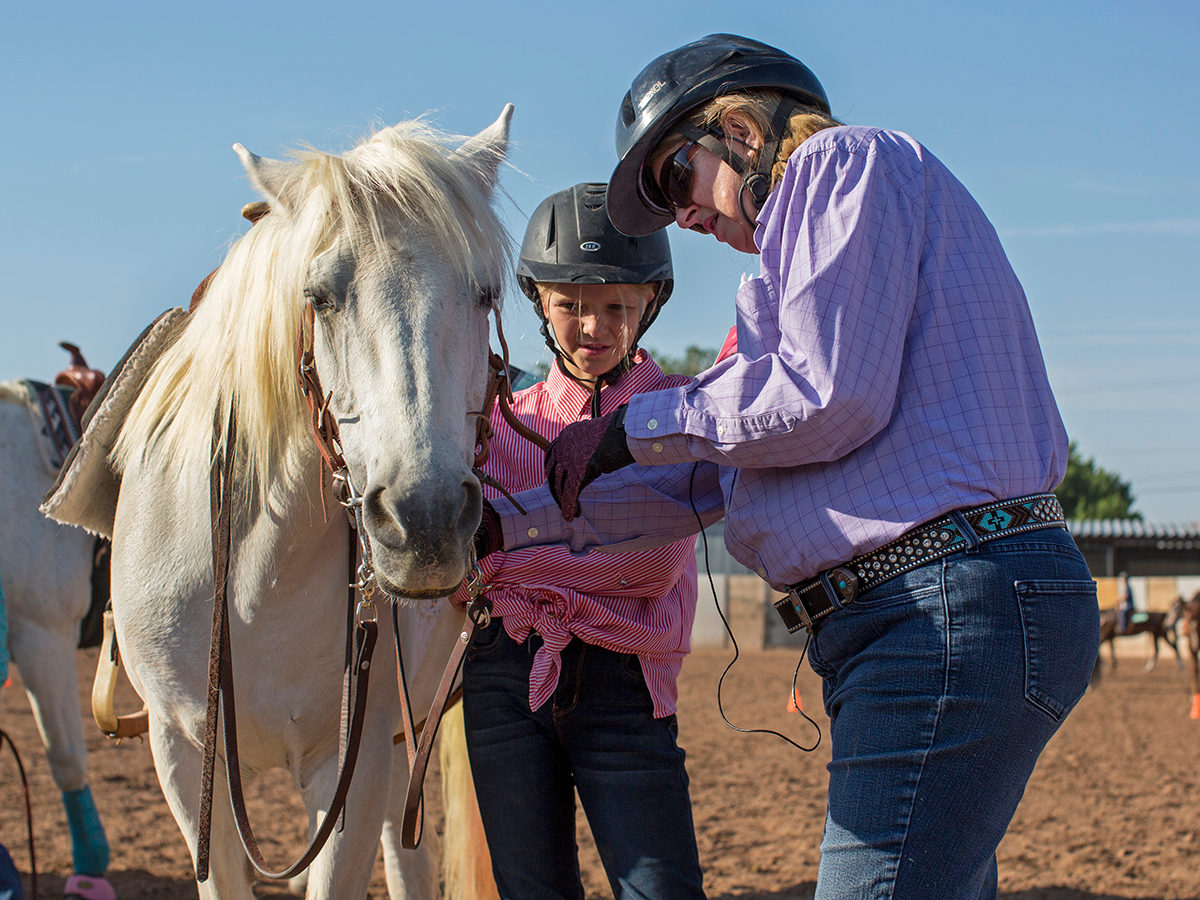
Horse projects provide youth with an opportunity to handle, care for, ride, or drive horses. There are nine horse projects available, and members must complete levels 1-3 in Horsemanship to participate in the Advanced Horse Projects.
Members are eligible to participate based on their ability and skill level, and skill levels do not necessarily correspond to years in the program. It's possible to complete several levels in one year or take several years to complete a single level.
Assessment checklists in the Horse Project Helper's Guide are used by leaders to determine when a member has completed each level.
Please note that some variations in the projects may exist depending on the county or tribal area.
It may take three years to complete a level. You must complete a minimum of seven activities and five learning experiences each year to complete this project.
Projects to learn
Horsemanship is the basis for the horse project. Youth will learn basic horse safety skills, horse care and nutrition, equipment needed to care for your horse, terminology, horse breeds, coat colors/markings and about businesses and careers that are related to horses. Members must complete Horsemanship levels 1, 2 and 3 before entering Colt to Maturity and Green Horse projects. (See project descriptions for specific assessment requirements.) Horsemanship has seven levels (Western or English).
Materials
M Horsemanship, Levels 1–3, 5246.
M Horsemanship, Levels 4–7, 5262.
Members must be 11 on Oct. 1; have completed Horsemanship levels 1, 2 and 3; and demonstrate
the ability to handle the project to the county horse leader or designated person.
Stallions will be allowed only in the yearling phase. Check with local county fair
rules on exhibiting.
This project is for those who own or have available a colt or filly to care for and train. This is a five-year progressive project beginning with a yearling colt. The project is designed to help youth select a foal and train it to maturity. Youth will use the same book for all five levels.
Materials
M4-H Training Horses, Yearlings to Five-Year-Olds & Green Horses, 5336.
Members must be 11 on Oct. 1; have completed Horsemanship levels 1, 2 and 3; and have demonstrated an ability to handle the project to the county horse leader or designated person.
This project is for those who have horses that are not fully trained, but don’t fit into the colt to maturity project because of age or ability. Youth will learn how to care for and train their horse. Members will use the same book for all four levels.
Materials
M 4-H Green Horse, Levels 1-4, 5256.
M 4-H Training Horses - Yearlings to Five-Year-Olds & Green Horses, 5336.
Working Ranch Horse is a heritage-based, activity-rich project designed to pass on to today’s youth the traditional practices of safe livestock handling from horseback. This project teaches mounted roping skills as a humane and useful livestock handling tool, as well as branding techniques, housing and care of cattle and horses. Members will use the same book for all four levels.
Materials
This project develops the members’ knowledge and skills in the art and science of using horses to transport materials. This project also provides opportunities to enjoy nature in ways that are otherwise difficult. Members may enroll in this project simultaneously with any other mounted horse project. Members will use the same book for all five levels.
Materials
This is a project to teach basic horse driving skills, safety and train a horse to drive in single or multiple hitches. Members may enroll in this project simultaneously with any mounted horse project. Members will use the same book for all four levels.
Materials
This project teaches you to select and evaluate horses, give oral reasons and place classes of conformation horses and performance horses. Members may enroll in this project simultaneously with any mounted horse project.
Materials
M New Mexico 4-H Horse Judging Manual, 200R48, available free online.
This project is intended to acquaint youth with careers in the horse industry and may be taken simultaneously with any mounted horse project. From stable manager to veterinarian, the 4-H horse careers project is designed to get members interested in horse or horse-related industries and give them an opportunity to explore careers in this field.
Materials
This project explores many aspects of the Small Equine industry, including breed basics, health and nutrition, reproduction, and grooming. This project also allows members to learn about competitions specific to small equines. Members do not need to be enrolled in regular Horsemanship classes to participate in the Small Equine Project.
Materials
Animal Record book
To complete a project, you'll need to have an animal record book sheet filled out and signed by a program leader. Record books focus on reflecting on what you did and learned, along with keeping track of finances spent taking care of and selling an animal.
Careers in Horse
If you are wanting to explore careers in beef, below are some of the potential routes you can take. 4-H members interested in going to college can also visit the 4-H foundation website for scholarships in their county or reservation.