


Horticulture Farm Policy Manual
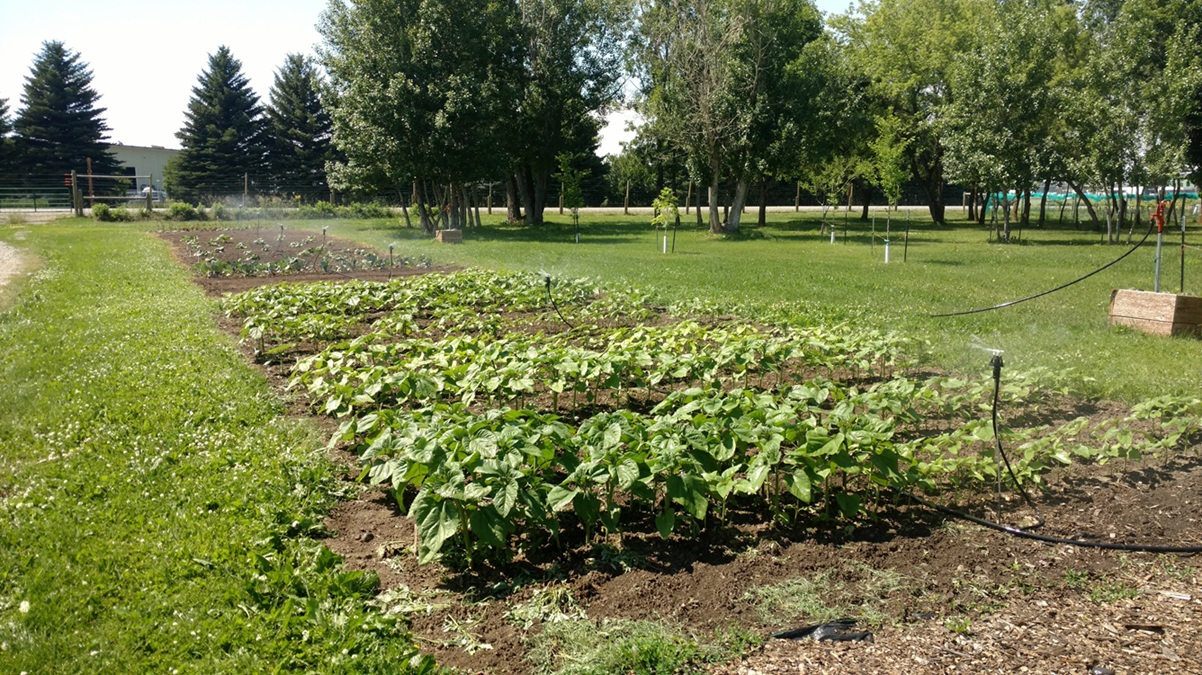
Introduction
The MSU Horticulture Farm is under the administration of the College of Agriculture and the Montana Agricultural Experiment Station. As part of the Montana University System, all rules that govern student and staff conduct on campus apply to the Horticulture Farm. The Horticulture Farm is a component of a larger research and teaching complex with multiple programs and personnel. Use of the farm is a privilege, not a right.
Policy outlined in this manual was developed to allow the efficient and effective use of the Horticulture Farm while maintaining the integrity of the facility. The management of the Horticulture Farm will be a combined effort of the Operations Manager and the Horticulture Farm Advisory Committee, which is comprised of appointed faculty members and researchers from departments involved with the Farm. Use of part of the farm for any purpose is with the permission of the Farm Manager and Advisory Committee and is subject to priority use, applicable fees, and adherence to all Farm policies. Failure to follow this Policy Manual will be grounds for termination of space assignment.
The Manager and Advisory Committee request your cooperation in applying this Policy as well as sincerely solicit your suggestions and constructive criticisms.
For questions about farm operations or any items in this Policy Manual, please contact the Farm Manager at hortfarm@montana.edu.
Land Acknowledgement
The MSU Horticulture Farm recognizes that our work in the Valley of Flowers takes place on ancestral lands shared by many peoples, including the Apsaálooke, Tsétsêhéstâhese, Séliš-Qĺispé & Ksanka, Amskapi Piikani, Lakhóta, Nimíipuu, Newe, Anishinaabe, Nēhiyaw, and Métis peoples, and all the unnamed ancestors who cared for this land in the past. Indigenous peoples stewarded this valley for thousands of years before colonization and broken treaties, and we strive to honor and respect these peoples, past and present and future. We are committed to welcoming Native students and researchers and supporting interdisciplinary education. And we will always work to build a culture of respect, inclusiveness, and reciprocity on this land that feeds and nourishes us all.
Worker Protection Standards
The Horticulture Farm complies with the Environmental Protection Agency's Worker Protection Standards (WPS). Almost all Farm users fall under the ‘Agricultural Workers’ category, defined as “those who perform tasks related to growing and harvesting plants on farms or in greenhouses, nurseries or forests.” This training is required of all Farm users and must be completed on an annual basis. All users of the Farm must have a valid and current WPS training form on file with the Manager or a Montana Department of Agriculture Pesticide Applicator's License in their possession.
The Farm Manager will offer WPS training at the beginning of each Farm season, but training is also available upon request. Contact the Manager to schedule training.
Farm Rules
The Farm will be periodically inspected by the Manager and/or Advisory Committee for rule compliance.
- Do not smoke, vape, drink alcohol, or use any illegal drug on the Farm at any time. For more information, please read MSU's Alcohol, Drugs, and Tobacco Policy.
- Do not bring onto or discharge firearms, bows, or pellet/air rifles on the Farm at any time.
- Pets are not allowed on the Farm at any time, including dogs. Pets on location are in direct violation of food safety regulations. If a user has a certified service animal that they wish to bring onto the property, they must first contact the Farm Manager.
- Do not walk on, handle, harvest from, or otherwise contaminate research or teaching plots without explicit permission from the Farm Manager or project PI. Respect other users’ property (tools, supplies, etc.) and do not use them without permission from the owner or the Manager.
- Do not modify any structure at the Farm without permission from the Manager.
- All gates must remain closed after working hours and on weekends.
- Project leaders are responsible for training their employees, graduate students and anyone working for them in the proper use of Farm procedures and policies. Project leaders are responsible for the actions of their employees and students.
- Clean and return all tools and equipment to the appropriate location after each use.
- Project space must be kept tidy and weed-free.
- Use space effectively. Failure to use space effectively will be grounds for reassignment.
- When sharing growth space, individual researchers will not interfere with other studies or projects being conducted; this includes watering, fertilizing, weed management, spraying.
- Farm users should park across the road in the Miller Pavilion parking lot. No student vehicles may be parked around the farm buildings, and no vehicles should ever be parked along the farm lanes or on lawn areas.
- All handling or application of pesticides must be done by someone with an appropriate license.
- All pesticide applications must be recorded and flagged with appropriate re-entry interval signage.
Farm Facilities
Farm support buildings include a central multi-use barn, four storage sheds, three equipment shacks, a pump house, and the farm office. All buildings are under the control of the Manager and the Advisory Committee and are not to be altered by users without permission from the Manager.
Research space consists of multiple field plots of varying sizes, ten high tunnels, and a block of raised beds. Anyone wishing to request space may submit a Farm Space Request Form. On-going use of a given plot has priority over proposed use of additional vacant space in that plot in the case of incompatibility of plant, disease, or soil needs.
Well water is available for irrigation at multiple hydrants around the farm, and hoses and sprinklers are provided by the Farm for use. Surface water is also available on the north half of the Farm from an irrigation pond and pump on the east side of the property, which is distributed through handline sprinklers. If users wish to use handline for irrigation, contact the Farm Manager to coordinate setup and use of the pump.
High Tunnels
High tunnels 1 through 4 are Certified Organic and reserved for vegetable production through the Towne’s Harvest Garden practicum. Other high tunnels may be available for research use; contact the Farm Manager about availability.
The Farm may have the ability to construct more high tunnels for research use if researchers have funding to pay for framing and materials. New high tunnels will come under the jurisdiction of the Farm Management; however, the purchaser has priority in use assignment.
Farm Research Use
Space Assignment
Interested parties may fill out a Farm Space Request form. The Manager and Advisory Committee will review requests and assign space based on project needs. Assignment of space to users will be made in one-season (April to October) intervals. Unless reassigned in response to a new request for the next season, space must be relinquished and vacated at the end of the season. All projects will be reviewed on an annual basis by the Manager and Advisory Committee. Renewal of space for another season is contingent on project adherence to Farm policies. Projects in arrears on space fees or fines will not be renewed.
Fee Overview
Space Fees
To generate funds for maintaining the farm facilities and grounds, users will be charged fees based on the amount of space used, with a minimum fee of $500 per project. Fees will be billed once per season. Any changes to space fees will be communicated to users at least three months in advance. Fees for space are as follows:
- Field Plots: $0.05 per square foot per season
- High Tunnels: $0.25 per square foot per season
- Raised Beds: $2.00 per square foot per season
Tractor Use
Tractor use carries a fee of $30 per hour. This fee helps pay for tractor fuel, regular maintenance and upkeep, and any necessary repairs. Tractor fees will be billed on a quarterly basis.
Fines
Failure to adhere to Farm policies and expectations will incur fines. Users will first be issued a warning and given time to rectify the situation, and fines will only be assessed if the user fails to respond in the time given. Fines include flat-rate fines as well as being billed for labor and/or supplies. Reasons for the assessment of fines are as follows:
- Failure to clean space after vacating: $50 or cost of staff labor to clean space, whichever is greater.
- Failure to keep space weed and refuse free: cost of staff labor to clean space.
- Tossing rocks from plots into turf areas: $50, plus cost of repairs for any damage to equipment or facilities
- Improper winter storage of rodent attractants: $100 plus the cost of staff labor to properly store materials.
- Breaking Farm rules: $50 per infraction.
Vacating Space
At the end of each growing season or upon termination of each experiment, the project leader is responsible for seeing that all growing space is cleared. All plant material must be pulled and taken to compost. Irrigation equipment must be bundled neatly and returned for storage. Any trash, plant stakes, row markers, and other refuse must be removed and disposed of in dumpsters. Once the space is vacated, inform the Farm Manager. Farm staff will prepare plots for the next user or season. If space is not cleaned appropriately, the user will be issued a warning and given two weeks to clean their plot. After two weeks, the user will be fined $50 or the cost of staff labor required to clean the plot, whichever is greater.
User Responsibilities
Users are responsible for all day-to-day maintenance of their plot, including but not limited to fertilizer applications, weeding, watering, and end-of-season clean-up.
Hoses and irrigation lines must be coiled neatly inside of plots or next to hydrants when not in use; they should not be left lying in or across turf areas, as this can pose a hazard to mowers.
Plots must be kept tidy and weed-free. Weeds in plots can go to seed and spread to other areas of the farm, which impacts both Farm staff and other users. Weeds, dead plants, and pruned material must be taken to the compost pile by the end of each workday and should not be left in plots or on lawn areas. If weeds are close to going to seed or piles of dead plants are left in or around plots, the user will be issued a warning and given one week to rectify the situation. After one week, the user will be charged for the cost of Farm staff labor to clean the plot.
Users must not move rocks from plots into lawn or turf areas. Rocks in turf can cause significant damage to mowers, and rocks can also be flung at high speeds and damage nearby buildings or vehicles. If users pull large rocks out of plots, they should stack the rocks neatly in a corner of the plot. Farm management will pick up piled rocks and move them to a central rock pile. If rocks are found in grass by a plot and staff must move them, the user will be given one warning. If the user continues to put rocks in the grass, they will be fined $50 for all following offenses. If rocks in grass by a plot are hit by a mower and cause equipment, building, or vehicle damage, users will be charged for repairs.
Composting
The Farm has an onsite composting pile north of the main barn complex along the east fence lines. Users may use this to dispose of soil and plant materials only. Any trash (including but not limited to irrigation line, weed fabric, plastic or paper bags, and wood tags or stakes) must be disposed of in the trash. Woody plant material greater than 0.5 inches in diameter cannot be composted; there is a separate woody pile behind the compost piles for these materials.
There are usually two compost piles, one for fresh disposal and one that is ‘cooking down.’ Piles will be labeled appropriately; only add fresh materials to the fresh pile. Compost from the ‘cooked’ pile may be available to users; contact the Farm Manager for availability.
Any soil or plant materials that are contaminated with herbicides or other chemicals should not be put in compost. Dispose of those materials in the dumpster across the street at the Miller Pavilion.
Storage Space
Some shed or barn storage space may be available for users upon request. Contact the Farm Manager to inquire about storage availability.
Winter Storage
If users will be storing equipment, tools, or any plant materials at the Farm over the winter, they must comply with the following procedures. Improper storage can attract rodents over the winter, greatly increasing the risk of disease transmission (especially of Hantavirus, which causes Hantavirus Pulmonary Syndrome) and requiring extensive sanitation and cleanup in the spring. All storage spaces and user materials will be inspected in late fall by the Farm Manager for compliance. Failure to comply will result in a warning, and users will be given two weeks to bring materials into compliance. If not rectified, users will be fined $100 plus the cost of staff labor to properly store materials.
- All plant material, especially seeds, must be stored in a sealed, impervious container inaccessible to rodents.
- Soft materials, such as fabric, row cover, cloth or plastic bags, tablecloths, etc., must be placed in a sealed, impervious container. Rodents like to use these materials for nesting.
- Any storage tubs or containers must have a sealed lid to exclude rodents.
- Liquids should not be stored at the Farm over the winter, as none of the Farm buildings are heated. Liquids must be taken off-site for storage.
Policies for Non-Assigned Farm Support Areas
There are several common use areas around the Farm, including the washing sinks and general workspace in the main barn, storage sheds, and restroom facilities. As these areas are for the use of all Farm users, each user is responsible for cleaning up after themselves when they are done using the space. This includes but is not limited to:
- sweeping floors
- wiping down counter-tops
- rinsing out sinks
- disposing properly of trash and compost materials
Users should leave the space as clean or cleaner than it was when they arrived. Farm staff will empty the barn trashcans weekly, but there is no janitorial service at the Farm.
Only supplies and equipment used in direct support of ongoing Farm research may be stored in Farm facilities. Users utilizing any of the Farm storage areas must clearly label their materials with their name, phone number and/or email, and date placed in storage. Farm staff will clean out storerooms periodically, and any materials that are unlabeled, undated, or more than two years old will be disposed of. Farm storerooms are NOT meant to be permanent storage.
Use of Hazardous, Toxic, or Radioactive Materials
All state and federal guidelines regarding hazardous and radioactive materials will be followed. These materials will be used in a manner to ensure the safety of others and such that they will have no influence on other research. These materials may be stored only in the area specified for toxic chemical storage (Shed #1). These storage areas are under the control of the Farm Manager.
Equipment and Tool Use
A variety of basic gardening hand tools are available for all users and are located in the far east bay of the barn. Users must clean and return all tools to the appropriate location after each use or at the end of each workday. Tools are not to be taken off the Farm property for any reason. Please be respectful of Farm property.
Power tools such as push mowers, string-trimmers, and rototillers are available for Farm users upon request. Users must be trained in the proper operation and care of power equipment before use. If equipment damage occurs beyond usual wear and tear, users will be charged for repairs. Arrange for training through the Farm Manager.
If tools or equipment are damaged, please notify the Farm Manager or staff immediately so that the tools can be repaired in a timely fashion. Leaving broken tools for others to discover later creates delays and is problematic for Farm staff.
Tractor Use
The Farm has a small tractor with a variety of implements on site. Users must be trained in tractor operations and use by the Farm Manager and attend a tractor safety class (offered once per summer) before they will be allowed to operate the tractor. Tractor use carries a fee of $30 per hour. This fee helps pay for tractor fuel, regular maintenance and upkeep, and any necessary repairs. Tractor use fees are billed quarterly.
If users do not wish to be trained for tractor use but need tractor work done in their plot, such as seeding or harvesting work, the Farm Manager can do the work upon request. Start- or end-of-season soil tillage is provided by the Farm staff, but for any additional tractor work, the user will be charged for the tractor hours.
Farm Access
The Horticulture Farm operates from April 1st through October 31st, weather permitting. Winter activities require prior approval from the Farm Manager. Winter access is difficult, and services are extremely limited.
Daily Farm hours of operation are dawn to dusk. After-hours use must be approved by the Farm Manager. All gates must remain closed after working hours and on weekends. The perimeter fence is electrified to keep deer out of the Farm; use extreme caution around gates and other entrances.
Users of the Horticulture Farm should park in the Miller Pavilion parking lot. Parking around the Farm barn is reserved for farm-owned and employee vehicles only. No vehicles are to be parked on lawn areas or along the Farm lanes or access areas. Users may park their vehicles adjacent to their assigned research plots so long as they are not blocking any roads or access drives. Users may be asked to move vehicles when staff are mowing the grounds.
Any event or large group use of the Farm must be approved by the Manager. Please submit requests in writing to the manager at least one week prior to the event.
Pest Management
All pesticide applications at the Farm must be performed in accordance with applicable state and federal requirements. Pesticide applicators must have required training and certifications through the Montana Department of Agriculture, and records of all applications must be posted in the Hort Farm pesticide shed in the provided folder. If users wish to apply their own chemicals, they must either provide the Manager with documentation of their applicators license or receive training from the Manager as a Pesticide Handler under the Manager’s license. Contact the Manager to schedule Handler Training.
The Manager should be notified of all pesticide applications at least three business days in advance to avoid conflicts with other users.
For users without applicators licenses, contact the Manager to request pest or weed treatments if the need arises.
Farm users must obey all posted pesticide warning signs, and users must not enter any signed area until the signs are removed by Farm staff.
All pesticides on the Farm must be stored in Shed #1 in secondary containers or tubs to contain any spills or leaks. If users bring their own regulated chemicals onto the Farm, they must inform the Manager immediately so the chemicals can be added to the Farm inventory list, and the chemicals must be stored appropriately and be clearly labeled with the user’s name.
Grounds and Facilities Maintenance
Farm staff are responsible for general grounds maintenance and upkeep, including all fence lines, lawn areas, ornamental landscaping, and tree care. Farm users are not permitted to modify any part of the grounds, buildings, or landscaping without express permission from the Manager. This includes but is not limited to plot expansion, tree or shrub removal, landscaping changes, and fencing additions. Suggestions for landscaping are welcome and can be submitted to the Farm Manager.
All farm buildings and high tunnels are maintained by Farm staff. If users notice damage, wear, or other issues with buildings, they are to inform the Farm Manager promptly so that repairs can be made in a timely fashion.
Services Provided by Farm Staff
The Farm Manager is responsible for overall operations, application of policies, and training project leaders in use of the facilities. The Manager will maintain accurate records of all use assignments, chemical treatments of space, and other information pertinent to the management of the Farm. And the Manager will provide training for users in proper use of Farm facilities, including Worker Protection Standards training, safety training, and tractor training.
Farm Staff provide the following services for paying users:
- Coordination and application of pest, disease, and weed control.
- Monitoring condition of facilities and equipment and arranging for repairs when necessary.
- Cleanup and maintenance of common areas and grounds; this does not include cleanup identified as the responsibility of users elsewhere in the Farm policies.
- Maintaining farm-owned equipment and common-use tools.
- Tractor or rototiller soil tillage for spring plot preparation and end-of-season cleanup.
Additional services by Farm staff may be available upon request but will incur additional fees. Contact the Farm Manager to request services and negotiate fees.
Emergency Procedures
First aid supplies can be found in the main bay of the barn and the tool bench in the easternmost bay of the barn. The main bay of the barn also has an eyewash station for emergency use, located by the sinks. Fire extinguishers can be found in every bay of the barn, the implement/cart shed, and the Staff Office.
For medical emergencies, call 911.
For non-medical emergencies, call Campus Police at (406) 994-2121.
The street address of the Horticulture Farm is 2730 West Garfield Street.
If any accidents or injuries occur, inform the Farm Manager as soon as possible for reporting purposes.
Farm Contacts
Horticulture Farm Operations Manager: Allison Rognlie
allison.rognlie@montana.edu
(406) 581-9754
BART Farm Manager: Kellen Marlow
kellen.marlow@montana.edu
MSU Police
(406) 994-2121
Advisory Committee
Macdonald Burgess: Plant Sciences & Plant Pathology, Towne’s Harvest Garden
mburgess@montana.edu
(406) 994-3510
Michelle Flenniken: Plant Sciences & Plant Pathology
michelle.flenniken@montana.edu
(406) 994-7229
Uriel Menalled: Land Resources & Environmental Sciences
uriel.menalled@montana.edu
Kirsten Ostberg: Plant Sciences & Plant Pathology
kirsten.ostberg@montana.edu
(406) 994-5215
Connor Schmitz: Plant Growth Center
connor.schmitz@montana.edu
(406) 994-2231
Qing Yan: Plant Sciences & Plant Pathology
qing.yan@montana.edu
(406) 994-4164