


Private Applicator Training Program
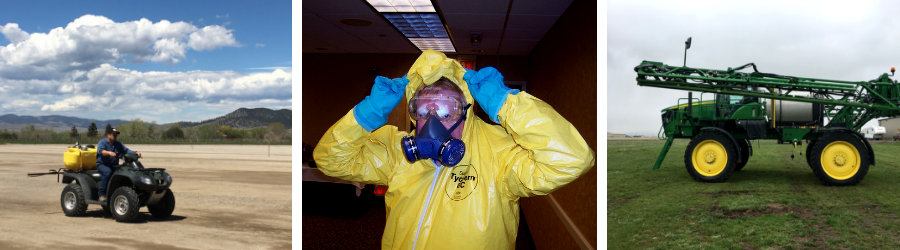
The Montana Private Applicator Training (PAT) Program is coordinated by MSU Extension through the Montana Pesticide Act and an agreement with the Montana Department of Agriculture (MDA) stipulating the certification and training of approximately 5,000 private applicators in Montana.
The PAT program is for individuals who need to apply restricted use pesticides (RUPs) to land they or their employer own, rent or lease for agricultural purposes. This includes privately owned farms, ranches, nurseries, and greenhouses. Other pesticide applicators who do not need a license can also benefit from the training offered from this program.
For more information view the Montana Private Applicator Program Policies and Procedures.
Content
- To Become Certified as a Private Applicator
- To Recertify your Private Applicator Permit
- Permit Categories
- Recertification Cycle
- Permit Fees
- Credit and Permit Information
- Supervising Noncertified Applicators
- Submitting a Program for Credits
- Other License Types
To Become Certified as a Private Applicator
Private applicators must be certified prior to purchasing and using RUPs. To become certified an applicator has two options: (1) take an exam or (2) attend an Initial Private Applicator Training.
Montana Private Applicator Certification Exam
The Montana Private Applicator Certification Exam can be taken at your local county or tribal MSU Extension office. The exam has 50-questions and must be passed with 70% or better. The exam is open book and not timed.
Initial Private Applicator Training
An Initial Private Applicator Training includes eight-hours of instruction covering the basics of pesticide use adhering to specific criteria set for initial programs in the MT PAT Policies and Procedures. Upon completion of the program applicators must take an ungraded 50-question exam. Initial Private Applicator Trainings are offered annually throughout the state.
Training Material
If you attend an Initial Private Applicator Training you will be provided with the following manuals at the time of the event. If you plan to take the exam you are required to have the following manuals prior to applying for a Montana Private Applicator permit. MSU PEP highly recommends purchasing and studying these materials in advance.
- MontGuide: The Montana Private Applicator Program
- Manual: National Pesticide Applicator Certification Core Manual (Second edition, 2014)
- Manual: Montana Private Pesticide Certification Addendum (Fourth edition, 2026)
To Recertify your Private Applicator Permit
Once you have obtained your private applicator permit you will be considered a recertifying applicator. In order to renew your pesticide permit for another five-year cycle, you have two options: take the Montana Private Applicator Certification Exam or obtain six continuing education credits (CECs) prior to the end of the recertification cycle.
Montana Private Applicator Certification Exam
The Montana Private Applicator Certification Exam can be taken at any MSU Extension office with an active PAT Coordinator. The 50-questions exam is closed book and must be passed with 70% or better. Recertification exams can only be taken in the last year of the cycle.
Attend Pesticide Education Courses for Credits
Recertifying applicators must obtain six CECs by attending courses throughout the five-year recertification cycle. These courses may be in-person, online classes or webinars. Programs are offered throughout the state by MSU Extension, local governments and other sponsors. Programs must be approved by the MDA to be eligible for CECs.
To Renew your Permit
In November of your permit expiration year the MDA will email or mail you a renewal letter. When you get this letter, you need to follow the instructions on how to renew either by mailing in the application and $60 permit fee or online. If you have not received a letter by mid-December, please contact your local PAT Coordinator or the MDA at pestlicensing@mt.gov or 406-444-9493.
Applicators initially certified midway through the recertification cycle (after June 30th of the third year) only need to get 3 CECs prior to the expiration date. Those certifying in the last year need no credits to recertify.
Expired Permits
If you allow your pesticide permit to expire you must either take a closed book Montana Private Applicator Certification Exam within 12 months after the permit expiration or attend an Initial Private Applicator Training. After 12 months you are considered a new applicator and will follow the certification guidelines of the initial applicator above.
Permit Categories
If you intend to purchase and apply pesticides in the following manner(s) you must obtain category certification in addition to the Private Farm General Permit.
Category Certification
Private Aquatic Pest Control
Required when using or supervising RUPs in standing or running water. Study the Aquatic Pest Control Manual. The exam is open book with 70% pass rate administered by PAT Coordinators at MSU Extension offices.
Private Sodium Cyanide (M-44)
Required if you use or supervise the use of sodium cyanide in mechanical ejection devices to control predators. Study the M-44 Training Manual. The exam is closed book exam with an 80% pass rate and do category specific training with the MDA.
Private Livestock Protection Collar
Required if you use or supervise the use of sodium fluoroacetate in a protective collar to control predators. The exam is closed book exam with an 80% pass rate and do category specific training with the MDA.
Private Non-Soil Fumigation
Required if you apply restricted-use non-soil fumigants to structures or burrows. Study the Non-Soil Agricultural Fumigation Manual for Private Applicators. The exam is open book with 70% pass rate administered by PAT Coordinators at MSU Extension offices.
Private Aerial
Required if you apply restricted-use pesticides by aircraft including drones. Study the Aerial Applicator’s Manual. The exam is open book with 70% pass rate administered by PAT Coordinators at MSU Extension offices.
Manual Purchase
The Non-Soil Agricultural Fumigation Manual for Private Applicators (EB0229) is available from the MSU Extension Store or by calling (406) 994-3273.
All other manuals are available from the MDA online or call (406) 444-3732.
Category Recertification
Category certifications are synchronized with the private applicator general permit certification cycle. To renew, take a closed book exam in the last year of the recertification cycle or earn three CECs in the category before the cycle ends. Categories acquired in the last year of the certification cycle do not require any addition credits to requalify into the next cycle.
Category Expiration
Lapsed categories require testing. Exams proctored by MSU Extension are closed book within one-year of expiration; after one-year they return to open book. Exams proctored by the MDA are closed book.
Recertification Cycle
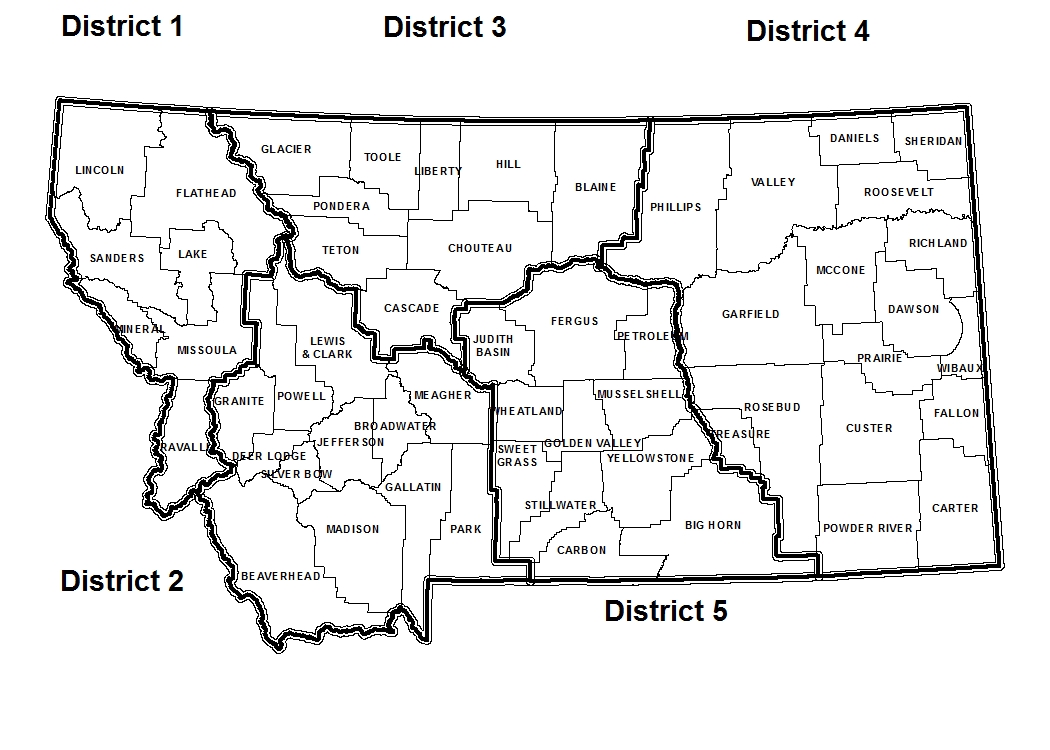
PAT Recertification Cycle Dates by District
| District | Cycle Start | Cycle End |
|---|---|---|
| 1 | January 1, 2024 | December 31, 2028 |
| 2 | January 1, 2025 | December 31, 2029 |
| 3 | January 1, 2021 | December 31, 2025 |
| 4 | January 1, 2022 | December 31, 2026 |
| 5 | January 1, 2023 | December 31, 2027 |
Permit Fees
Private applicators must pay $12 for each year of the cycle for a total of $60 per each five-year recertification cycle to the MDA. This fee is to be paid at the time of licensing and when the license is renewed. The $60.00 is distributed in the following manner:
- $15.00 (25%) to MDA for administration.
- $15.00 (25%) to fund the waste pesticides and pesticide container disposal programs.
- $30.00 (50%) to MSU Extension broken down as follows:
- $5.00 (8%) to the MSU Extension Pesticide Education Program, and
- $25.00 (42%) to the MSU Extension office in which the private applicator resides. This money is used to support pesticide certification and training programs conducted in those counties.
Credit and Permit Information
It is an applicator's responsibility to keep track of their credits and the expiration date of their license. You can look up license and credit information online using the MDA Pesticide License Search Tool. Remember, you can always contact your local Extension office or the Pesticide Education Program to help you with your permit and credit information.
Supervising Noncertified Applicators
A certified private applicator may supervise the application of RUPs by noncertified family and employees. Employees must be at least 18 years of age, while family members must be at least 16 years of age. The minimum age exception does not apply to family members if the RUP is a fumigant, sodium cyanide, sodium fluoroacetate, or applied aerially.
Noncertified applicators must be trained annually with records of training kept for five years. MSU PEP recommends the certified private applicator presents the Worker Protection Standard (WPS) Agricultural Handler training to noncertified applicators they are supervising to meet the annual training requirement. This 38-minute video is available online through the Pesticide Education Resource Council (PERC). For additional training options and requirements please contact MSU PEP.
When supervising applicators the certifying applicator must provide safe working conditions, access to the label and be in communication with the supervised applicator no more than 100 miles away.
Submitting a Program for Credits
Courses must be approved by the MDA for pesticide education credits. Submit your program through the Request for Pesticide Course Recertification Credit Assignment form at least 30 days in advance of the program. Once approved, you will receive a sign in sheet to be used at the event. The sign in sheet must be returned to the MDA within 14 days of the conclusion of the event.
Other License Types
The Montana Private Applicator permit is specifically for applicators who want to apply RUPs on land they or their employer owns, rents or leases for an agricultural purpose. If this does not apply to you, you may need a different type of pesticide license. Other license types offered include:
- Commercial Applicators - Individuals who by contract or for hire, apply pesticides by aerial, ground, or hand equipment to land, plants, seed, animals, water, structures, or vehicles.
- Public Utility Applicators - Individuals who apply pesticides to land owned or leased by a public utility.
- Government Applicators - Individuals who apply pesticides for a city, county or state or other government agency to public land or right-of-way, or as a public service.
- Non-Commercial Applicators - Individuals who cannot be classified as a commercial, public utility, governmental or private pesticide applicators, but desire to apply restricted-use pesticides.
Certification and training for commercial, public utility, government and non-commercial applicators is coordinated by the MDA. More information on these licensing types can be found at the MDA Pesticide Licensing Program. Contact the MDA at (406) 444-4900 to learn more about obtaining a commercial pesticide license.